5 Ways to Make Civics Actually Click for Middle Schoolers
If you’ve ever tried to explain the Electoral College to a room full of seventh graders right after lunch, you know: civics can feel like a tough sell. The good news is that middle schoolers are wired for big questions about fairness, power, and justice. With the right structures, civics and government can become some of the most energizing conversations you have all year.
Below are five classroom-tested ways to make civics feel real, relevant, and actually fun for grades 5–8. You don’t need a huge budget or a perfect schedule—just a willingness to let students take the lead and connect content to their everyday lives.
1. Turn Everyday Decisions into Mock Elections
You don’t have to wait for a presidential race to run an election. Start small and keep it close to their world. Any classroom decision can become a chance to practice voting, campaigning, and tallying results.
Easy ways to try this:
- Vote on a class reward (extra reading time vs. game time, for example) using secret ballots and a simple ballot box.
- Run a short campaign for “Class Playlist Manager” or “Tech Captain,” where candidates give a one-minute speech before the vote.
- Have students design campaign posters highlighting issues they care about—homework load, hallway traffic, lunch options, etc.
What this builds: Students experience voting, representation, majority rule, and the idea that elected roles come with responsibilities, not just perks.
Pro tip: After the election, debrief what felt fair or unfair. Did everyone have equal access to information? Were any voices missing? This sets up later conversations about voter suppression and access.
2. Tie Current Events to Constitutional Principles
Middle schoolers are often more tuned in to the world than we think—through social media, family conversations, or YouTube. The key is helping them see that the Constitution isn’t just an old document; it’s shaping what they see in the news right now.
Simple routine you can use weekly:
- Step 1: Choose an accessible article or video. Look for stories about student speech, school rules, protests, elections, or branches of government. Keep it short and age-appropriate.
- Step 2: Identify the civics connection. Together, ask: Which part of government is involved here? Which amendment or constitutional principle might apply (freedom of speech, due process, checks and balances, federalism, etc.)?
- Step 3: Ask, “Why should kids care?” Have students complete a quick-write or turn-and-talk: How could something like this affect students or schools?
What this builds: Students start to see the Constitution as a living framework, not just vocabulary to memorize. They learn that rights and responsibilities show up in real decisions, not just on tests.
Pro tip: Create a “Constitution in the News” wall. Every time you read an article, add a sticky note with the headline and the principle it illustrates. Over time, students will see patterns.
3. Use Student-Led Debates and Socratic Seminars
Middle schoolers love to argue—they just don’t always love to support their arguments with evidence. Debates and Socratic seminars give them a structured way to do what they already enjoy while practicing civic skills like listening, questioning, and compromising.
How to make it work in a real classroom:
- Start with low-stakes topics. Try questions like, “Should homework be banned?” or “Should the school day start later?” before tackling heavier constitutional issues.
- Assign roles. Give students jobs like discussion leader, evidence tracker, summarizer, or equity monitor to keep everyone engaged.
- Use sentence stems. Post or project phrases such as “I agree with ___ because…,” “I’d like to add on to what ___ said…,” or “Can you clarify what you meant by…?” to support emerging speakers.
What this builds: Students practice civil discourse—disagreeing without disrespect. They also get comfortable referencing texts (like the Constitution, primary sources, or articles) to support their points.
Pro tip: After any debate or seminar, reserve time for a quick reflection: What did we do well as a community of thinkers? What do we want to improve for next time?
4. Simulate How a Bill Becomes a Law (Without Losing Your Mind)
The classic “how a bill becomes a law” flowchart is fine, but students really remember the process when they’ve lived it. A short simulation doesn’t have to be complicated or take weeks.
One-period mini-simulation idea:
- Set the problem. Pose a school-based issue: “Should our school require uniforms?” or “Should phones be allowed at lunch?”
- Draft a “bill.” In small groups, students write a short proposed rule (2–3 sentences) and a brief explanation.
- Assign branches. Some students play the House, some the Senate, and you (or a student) act as the President. Each chamber debates and votes; they can amend the bill along the way.
- Send it to the “President.” The President can sign or veto. If vetoed, students decide whether to override with a higher vote threshold.
What this builds: Students get a feel for checks and balances, compromise, and why the process can be slow (or frustrating!). They also see that laws affect real people with different opinions.
Pro tip: Have students wear simple labels (House, Senate, President, Lobbyist, Journalist) to keep roles clear. Later, connect back to the official steps they need to know for assessments.
5. Channel Their Energy into Community Action or Service Learning
Many middle schoolers feel strongly about issues—climate change, animal welfare, school rules, mental health—but don’t always see a path from “I care” to “I can act.” Service learning and community action projects bridge that gap.
Possible project ideas:
- Research a local issue (like a park renovation or bus route change) and write letters or emails to relevant officials.
- Partner with a local organization (food bank, animal shelter, community garden) and connect the work to civic concepts like public good and responsibilities.
- Design a school-wide awareness campaign about an issue students choose, including posters, announcements, or a short presentation to another class or at a family night.
What this builds: Students see themselves as civic actors now, not in some distant adult future. They connect rights to responsibilities and understand that small actions in their community matter.
Pro tip: Keep projects manageable. A powerful one-week action with clear reflection is better than an ambitious, months-long project that fizzles out.
Bringing It All Together
You don’t have to overhaul your entire curriculum to make civics click for middle schoolers. Start by choosing one of these ideas—a mock election, a short debate, or a single current events routine—and layering it into what you already do. Over time, those small shifts add up to a classroom where students feel informed, empowered, and ready to participate in their communities.
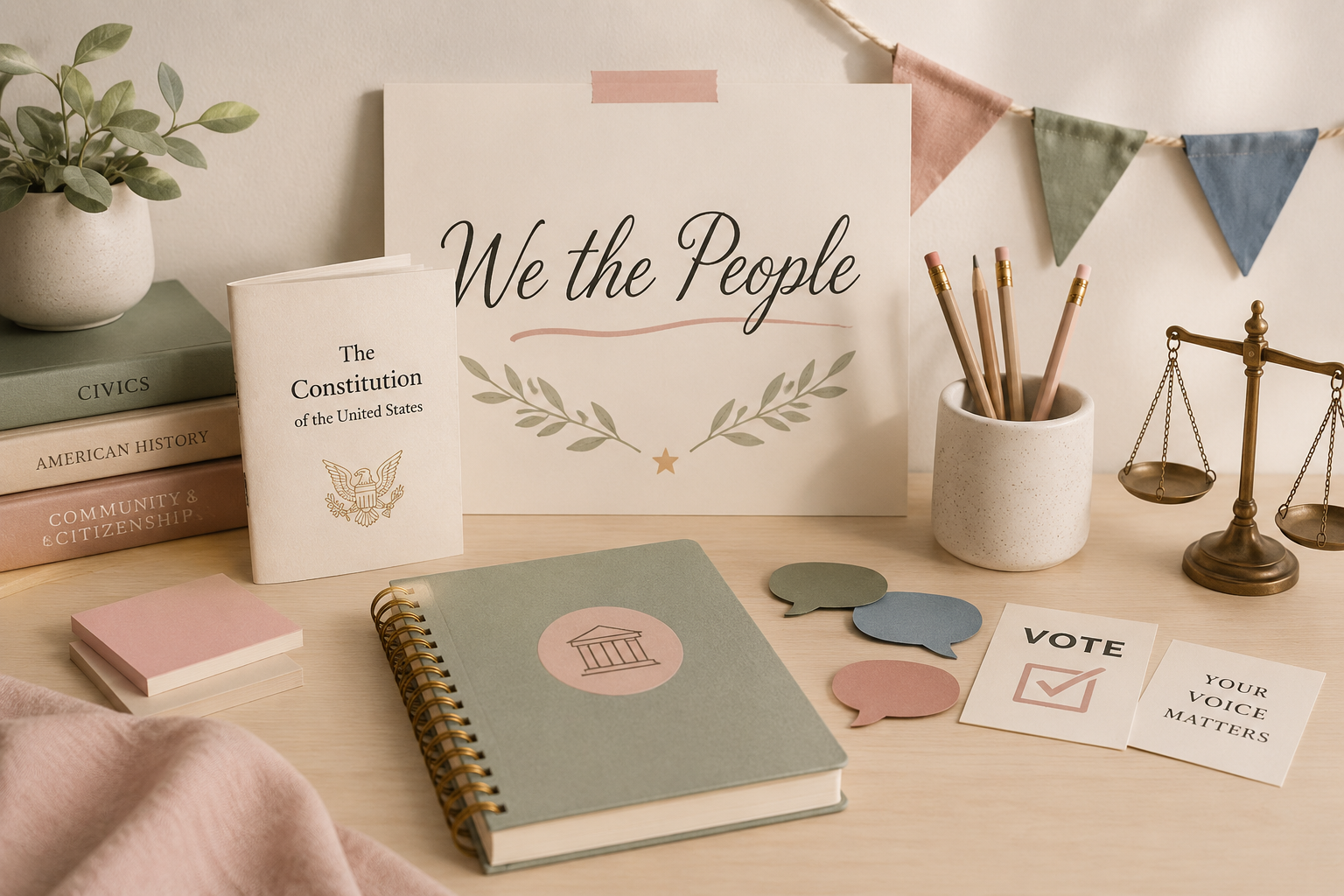
And remember, it’s okay if every lesson doesn’t feel magical. If students are asking questions, making connections to their own lives, and seeing themselves as part of “We the People,” you’re doing powerful work.
Leave a Reply